
How the Smith County Court Calendar Works
The Smith County General Sessions Court posts a recurring schedule covering six local sessions. Think of it as a map of sitting days. It lists when each type of court normally convenes, and nothing more. The schedule is not a case list. To pin one case to one date, a party still needs an order, a notice, a docket packet, or word from the clerk.
Most sessions begin at 9:00 a.m. Recovery Court starts earlier. When the schedule says "begins promptly," that describes the docket call itself. It does not mark the moment your particular matter gets reached. Order on the docket can shift throughout the day. The court works through pleas, motions, continuances, and contested hearings.
| Session | Recurring day | Start |
|---|---|---|
| Civil Court | First and third Tuesdays | 9:00 a.m. |
| General Sessions | Thursdays except fifth Thursdays | 9:00 a.m. |
| Juvenile Dependency and Neglect | Fourth Tuesdays | 9:00 a.m. |
| Juvenile Justice | Second Tuesdays | 9:00 a.m. |
| Recovery Court | Every Wednesday | 8:30 a.m. |
| Traffic Court | First and third Tuesdays | 9:00 a.m. |
Six Smith County Court Sessions
Smith County publishes six session types and two start times. That split is more than clerical housekeeping. Civil and traffic sessions may share Tuesday patterns, yet each keeps its own docket. Juvenile Justice and Dependency and Neglect sit on separate days with their own access limits. Recovery Court runs on its own weekly cadence. It carries the sole 8:30 a.m. start in the published set.
These figures point you to the right lane. They cannot prove a named person appears on a given day. Juvenile calendar labels do not open the related case records to the public either.
Smith County Court Date Lookups
The safest lookup pairs the Smith County court schedule with a case-specific source. The county does offer a public folder of date-named PDFs. But those scans are not a keyword database. For court-date questions in Circuit, Criminal, or General Sessions, call the Circuit Court Clerk. Chancery and Probate scheduling runs through the Clerk and Master.
- Identify the court and division from the citation, notice, order, or other case paper.
- Check the SC COURT DOCKETS folder for a PDF named for the relevant date.
- Use TennesseeCaseFinder after account login for covered Circuit or General Sessions-Civil inquiry data.
- Call or visit the correct clerk when no PDF appears, the scan is unclear, or the division is not covered.
- Compare the result with the latest signed order or attorney notice before going to court.
Find the Smith County Circuit Court Clerk at 322 Justice Drive, Suite 115, Carthage, TN 37030. Or call 615-735-0500. The counter is listed as open Monday through Friday, 8:00 a.m. to 4:00 p.m. Chancery and Probate questions go to the Clerk and Master in Suite 105 at 615-735-2092. That office keeps the same listed hours. The county posts no official daily printed-calendar channel. So call ahead before counting on a courthouse posting.
Smith County Docket PDF Dates
The official county court page links to the SC COURT DOCKETS folder. Each file carries a date label. The packets are multi-page image scans, so a browser text search may miss a party or case number even when the entry is plainly visible on the page.
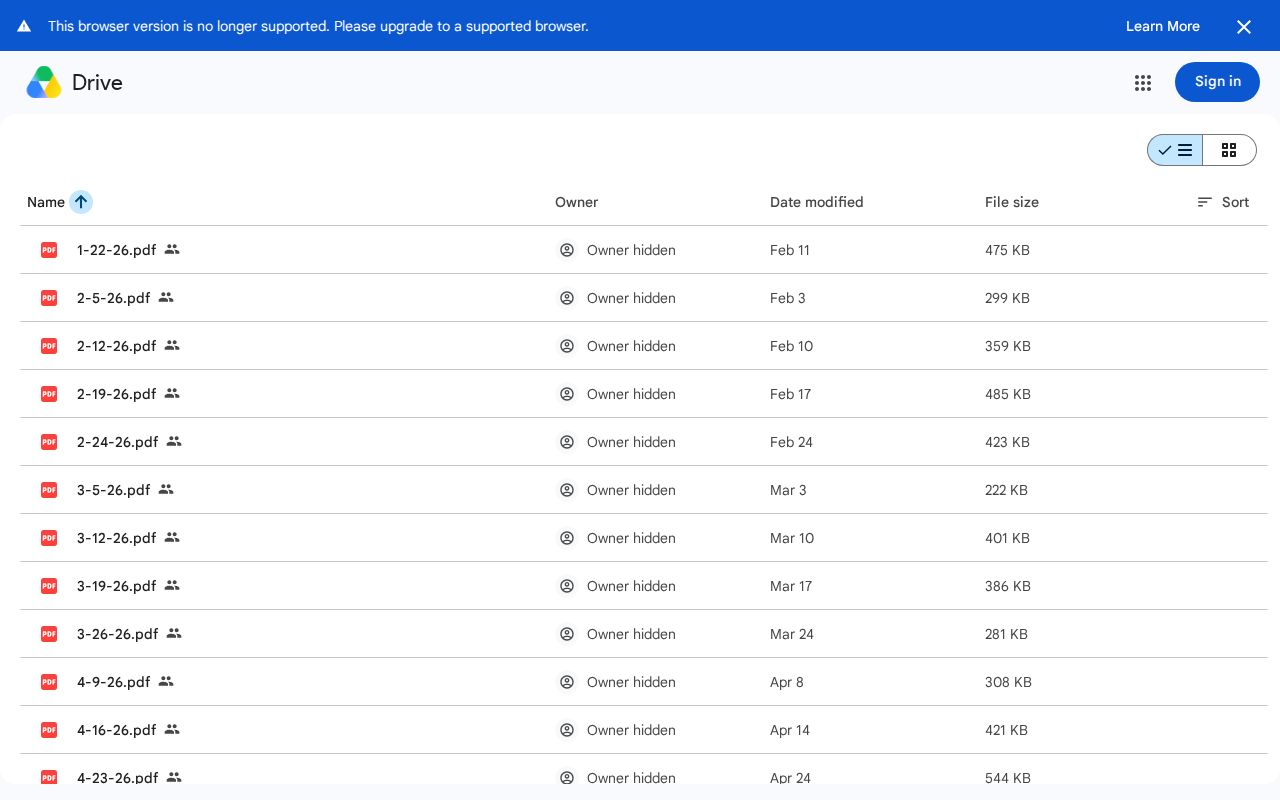
Pick the date first. Then read the packet. That folder shows the reach and the limit of this channel at once: it publishes docket files, but it does not serve as a complete party-name search. A missing date can mean the file was never posted, the case sits in another division, or the setting changed. Treat absence as a reason to call the clerk, never as proof of a cancellation.
Court Settings: What Each Field Means
A Smith County court setting marks one event in the life of a case. It might be a docket call, preliminary hearing, motion, review, trial, or another proceeding. Read every field as a scheduling cue. A setting label is never a final outcome.
| Date | The calendar day assigned to the event; confirm it against later orders. |
|---|---|
| Time | The session or call time, not always the exact time the case is reached. |
| Courtroom | The room or location if the notice provides one; ask the clerk when absent. |
| Judge | The judicial officer assigned or expected to preside, subject to change. |
| Setting Type | The event type, such as motion, review, preliminary hearing, or trial. |
The image-only packets do not display exact Smith County abbreviations. Trust plain labels over guesses about local shorthand.
Smith County Court Setting Terms
A few short terms come up again and again in court-date work. Knowing what they mean tells you what still needs confirming and which document carries the most weight.
- Setting
- A scheduled case event, not necessarily the trial or final ruling.
- Docket call
- The court calls matters set for a session and decides what is ready.
- Continuance
- An event moved to a later date by court action.
- Reset
- A new setting placed on the calendar after a prior date changes.
- Motion day
- A session for requests seeking court action before final resolution.
A reset is not a dismissal. A continuance does not end duties under a prior order, either. The newest court order and the clerk record control the next step.
When a Court Date Moves
Judges can continue, reset, or cancel settings at any point. The online folder may lag behind a late change. A case can also drop off one date simply because it moved to another packet. Never read a result into that shift alone.
Line up the latest docket entry against any order or notice the court sent you. Then call the Smith County Circuit Court Clerk or the Clerk and Master for the division involved. A lawyer's notice may also carry case-specific scheduling detail. When two sources disagree, ask which date now controls the official docket and whether a new written order has been entered.
Note: A recurring session date never overrides a later case-specific order, reset notice, or direct instruction from the court.
Smith County Fifth-Thursday Exception
One sharp edge hides in the General Sessions pattern. The published "every Thursday" excludes fifth Thursdays. A month with a fifth Thursday gains no extra regular session, a detail easy to miss when counting forward on a personal calendar.
Calendar check: A fifth Thursday is outside the stated recurring General Sessions pattern. Verify any case-specific notice directly with the clerk.
That exception reaches only the General Sessions statement. It leaves the separately listed traffic, civil, juvenile, Recovery Court, and Chancery schedules untouched. A signed setting notice may still give case-specific direction, and the clerk can confirm what applies.
Smith County Chancery Calendar Travel
Chancery cases in Smith County do not follow the weekly General Sessions rhythm. They run on the 15th Judicial District schedule instead. Per the Smith County Clerk and Master, short motions that need 15 minutes or less are heard in Wilson County. That happens on the first and third Fridays. Bigger Smith County Chancery sessions land in the first full week of February, June, and October.
Do not assume every Smith filing gets heard on Justice Drive. This multi-county plan catches people off guard. Check the venue along with the date. A short motion set elsewhere in the district is still a Smith County case. Chancery and Probate records stay with the Clerk and Master. They never go to the County Clerk or the General Sessions payment system.
Missed Settings and What Comes Next
A missed court date in Smith County calls for quick action. Call the clerk for the court listed on the citation, notice, or order. Ask what the docket now shows. Give the case or citation number if you have it. Reach out to your lawyer too. Do this if one represents you. And do not pay a fine just to test whether a case exists.
Missed a setting? A failure to appear may lead to new court action, and the result depends on the case and court.
Call the proper Smith County clerk at once to confirm the docket status and whether a new setting or court instruction exists.
A Tennessee lawyer can address case-specific risks and the safest way to respond.
The public PDF can lag behind reality. It may skip the division too. So clerk confirmation is the step that matters. File any new written notice with your case papers, and double-check the time and place before the next hearing.