
Smith County Criminal Docket Searches
The Smith County General Sessions page posts docket packets named by date. They work best when you already know the hearing date. The packets are not a party index. Nor do they give a full case history. They do not promise that every Criminal Court file appears. Bring a full name, the court, and the likely date. When a scan is missing or hard to read, call the Circuit Court Clerk. TennesseeCaseFinder claims Circuit and General Sessions-Civil coverage through an account. It does not promise a complete criminal search.
- Identify the court and likely hearing date.
- Open the county folder and choose the dated packet.
- Match the name and setting without treating a charge as an outcome.
- Call the clerk if the scan is unclear or the case is absent.
- Ask for a plain or certified copy if needed.
Smith Criminal PDF Limits
Smith County links its public docket packets to the SC COURT DOCKETS folder. Files there are organized by date. The packets are image scans, so text search and copy-and-paste can fail. A file name finds a session, not every case tied to one person. The official folder view displays this date-led layout.
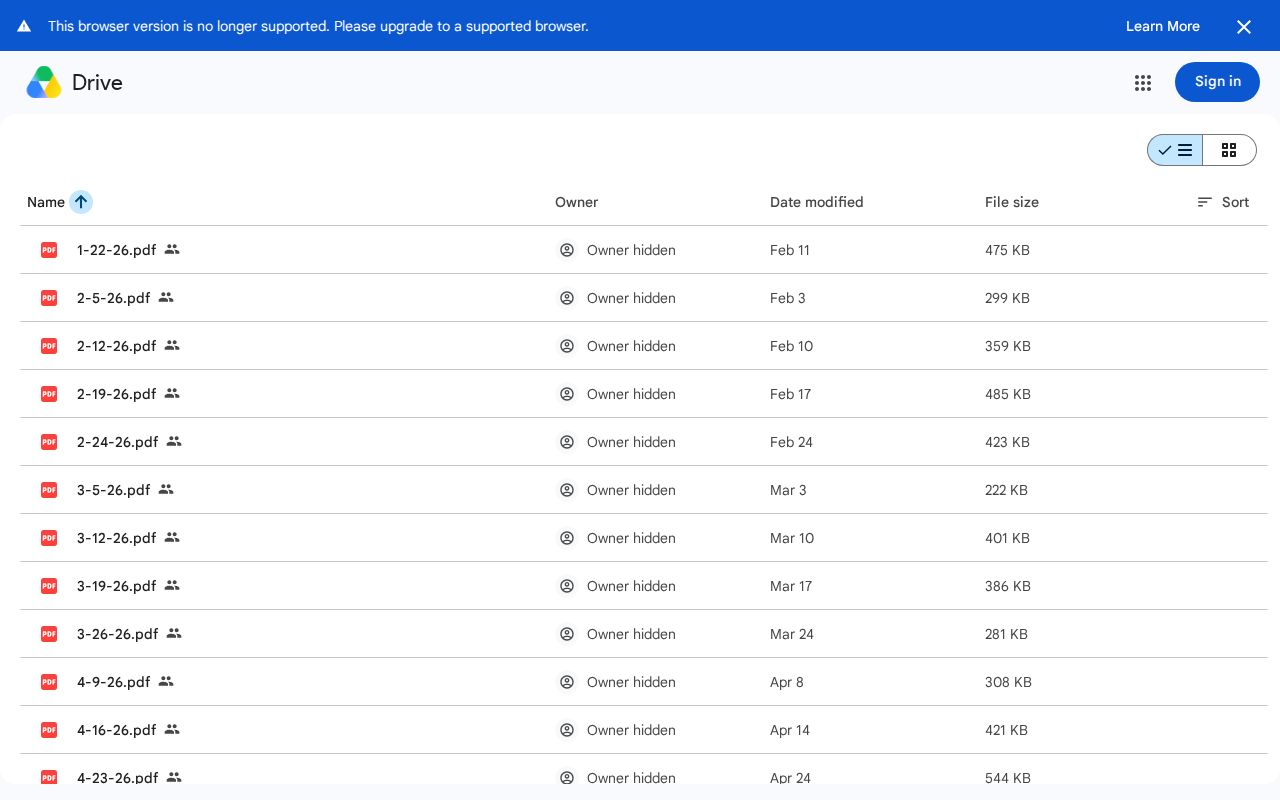
That format is why the clerk is the fallback for unreadable pages, older cases, and division questions.
Criminal Dockets: What They Show
A Smith County criminal docket is a procedural log. It is not the whole story of the proof. A charge is only an allegation, and a hearing date shows an event was set, not that it happened or resolved anything. Fields vary by division and packet.
| Case number | The clerk-assigned identifier; use it exactly as printed. |
|---|---|
| Charge | The alleged offense before the court. |
| Setting | An arraignment, hearing, review, plea, or trial date. |
| Action | A reset, order, bind-over, dismissal, plea, or verdict. |
| Disposition | The recorded outcome, best checked against the final order. |
Never guess at an unpublished Smith County number pattern. Quote the number exactly as the clerk assigned it, straight from the notice.
Smith Hearings Are Not Outcomes
Terms like arraignment, preliminary hearing, and pretrial describe where a case stands, not how it ends. A reset just moved the setting. It does not mean dismissal. For the result, rely on the latest docket action and the signed court order.
Quick check: If the packet shows only a future or reset setting, call the clerk before stating that the case ended.
This matters when you follow a public Smith County case over time. One dated packet gives only one view of the process.
Criminal Case Stages on the Docket
Smith County General Sessions can decide misdemeanors. The maximum penalty is 11 months and 29 days. Felonies may begin there with a preliminary hearing before moving to the Smith County Grand Jury. That step is called a bind-over. It hands the matter to grand-jury review, not a felony trial or a conviction.
Docket flow: Filing › Arraignment › Pretrial › Plea or Trial › Disposition › Sentencing
From there, a case can branch into a reset, dismissal, plea, indictment, or trial. Read Smith County entries in date order and confirm the newest signed action.
Smith Felony Bind-Over Trail
A felony can sit in General Sessions with no trial result following it. Ask whether the first court did only preliminary work. The Circuit Court Clerk can confirm a bind-over, whether a new Criminal Court number applies, and where the later docket sits.
- Preliminary hearing
- An early test of whether enough cause exists to move a felony forward.
- Bind-over
- The step sending a matter to grand-jury review.
- Indictment
- A formal charge returned by a grand jury.
- Disposition
- The result recorded by the court.
Stop at the first docket entry in a felony case and you will likely miss the rest of the Smith County Criminal Court trail.
Smith County Criminal Docket Courts
Tennessee's Smith County location page lists Circuit, Criminal, and Chancery Courts. General Sessions handles misdemeanors and felony preliminary work. Juvenile Justice carries extra access limits, and Carthage, Gordonsville, and South Carthage each use their own municipal routes.
| Lane | Role | Start with |
|---|---|---|
| General Sessions | Misdemeanors and preliminary hearings | Circuit Court Clerk |
| Criminal Court | Felony trial proceedings | Circuit Court Clerk |
| Juvenile | Restricted youth matters | Juvenile clerk channel |
| Municipal | City ordinance citations | Issuing city clerk |
The issuing authority on the notice is often the fastest clue.
Smith Criminal Clerk Fallback
The Smith County Circuit Court Clerk handles questions for Circuit, Criminal, and General Sessions. That is one office for three courts. Visit at 322 Justice Drive, Suite 115, Carthage, TN 37030. Call (615) 735-0500 Monday through Friday, 8:00 a.m. to 4:00 p.m. The official county page lists the clerk's duties. Records and court dates are among them.
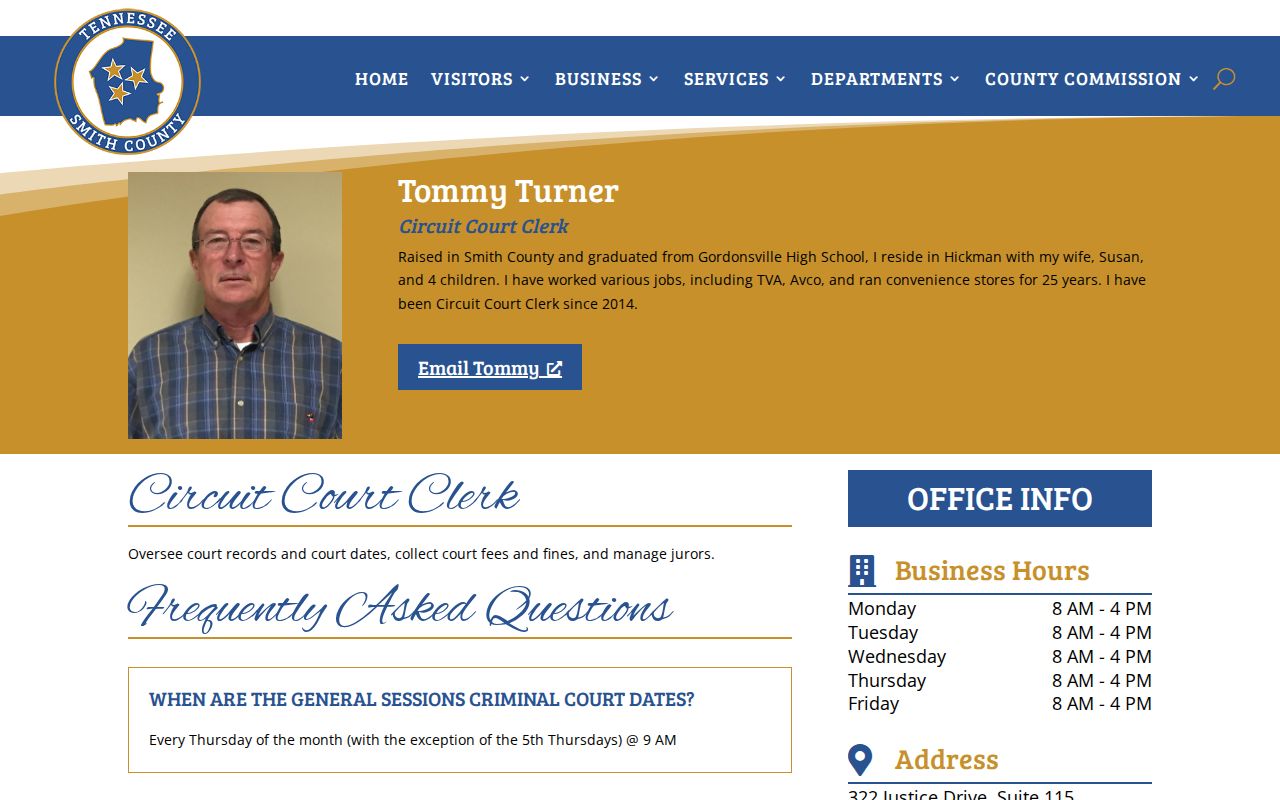
Whether by phone, counter, or mail, give the court, date range, name, number if known, and whether you want inspection, a plain copy, or certification. The county publishes no complete copy-fee schedule. Ask for the current cost.
Access Rules for Criminal Dockets
Access starts from Tennessee's public-record presumption, though statutes and court rules carve out exceptions. A public index can sit beside a sealed filing. Juvenile, protected, sealed, and expunged material calls for review of the specific record.
Key rules:
Tennessee Supreme Court Rule 34 recognizes public access to court public records while preserving exceptions.
Tennessee expungement guidance explains that clearing an eligible record requires the proper court process.
If an entry is missing, ask which public or redacted portion may be inspected. An absence does not prove no case exists.
Smith Disposition and TBI Handoff
A Smith County disposition and a state criminal-history record are two different products. The local clerk keeps the court file. The Tennessee Bureau of Investigation explains the state system. Diversion and expunction data move into it later. If the two do not match, check the originating Smith County court first. Then try the state channel. For the full local filing history, use the Smith County court case records process. An old packet should never replace the final court record.
Smith Docket Check Before Reliance
Before you rely on any Smith County court docket printout, weigh three things. First is the date it was made. Next comes the court lane it came from. Last is what kind of entry it is. A packet named for a date is only a snapshot. It may list a hearing that was later reset, or skip a signed order or a final sentence. The clerk can tell you whether a newer docket entry exists and whether the outcome sits in a judgment or sentencing order. That check matters most when a General Sessions felony entry has moved into a new Criminal Court file.
Keep any request narrow. Give the party name, the court, the rough year, and the clerk-assigned number if you have it. Say whether you want a docket sheet, a disposition, an order, or a certified copy. Smith County publishes no schedule of search, copy, certification, or transcript fees. Ask the clerk for the current amount before ordering. Never borrow a fee figure from another Tennessee county.
City matters follow a different route. Carthage, Gordonsville, and South Carthage each run citations through their own clerk. Such tickets may never reach the county PDF folder. Juvenile Justice files carry special access limits. Federal charges belong with the federal clerk. These boundaries matter, because a missing result in the wrong place is not proof that no record exists.
Access is one thing; accuracy is another. A public scan may be lawful to view. Yet it may still be old, hard to read, or tied to a single calendar. The Smith County court where the case lives is the place to confirm a current setting. It also confirms the final action. That short verification step turns a calendar sighting into a trustworthy account of the case record.